
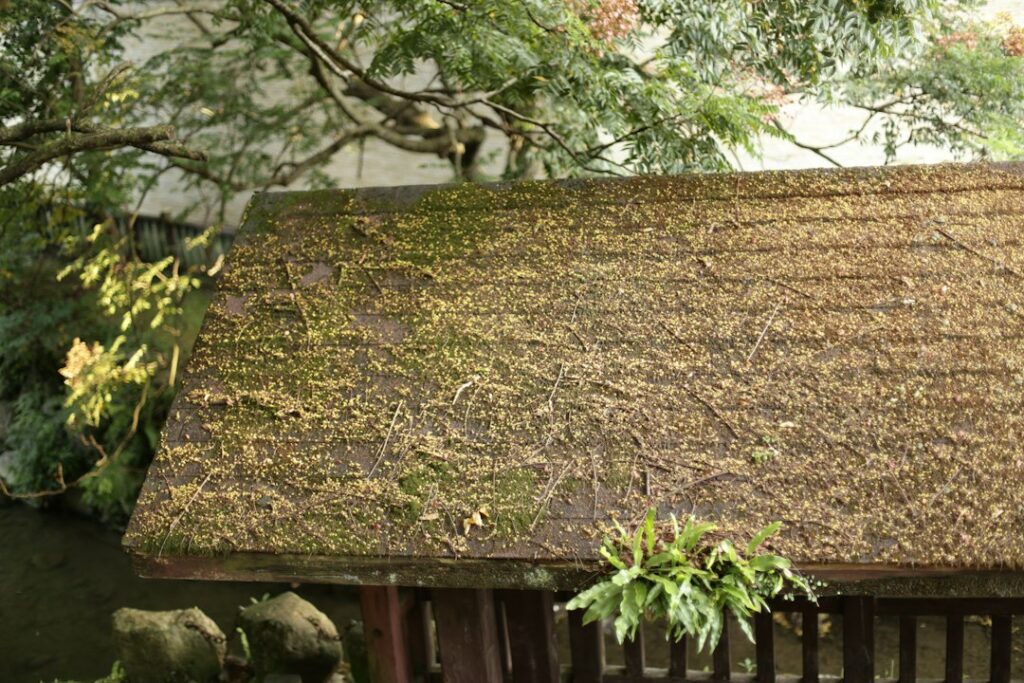
Cleaning a roof can remove leaves, dirt, moss, and dark biological growth, but the work also creates fall, slipping, chemical, and property-damage risks. For many homes, the safest approach is to clean only what can be reached from the ground or a properly positioned ladder without stepping onto the roof.
Is roof cleaning necessary?
Usually, roof cleaning is a maintenance choice rather than an emergency. Light surface dirt may have little effect on a roof, while heavy moss, thick leaf buildup, or blocked drainage can hold moisture against roofing materials.
In Canastota, seasonal changes can leave roofs exposed to wet leaves, freeze-thaw cycles, snow, and spring moisture. Those conditions make it useful to inspect the roof after autumn cleanup and again after winter, especially beneath trees or near roof valleys.
Cleaning may be worth considering when you see:
- Thick moss or lichen spreading across shingles
- Leaves collecting in valleys or behind roof features
- Algae-like dark streaks covering large areas
- Granules collecting heavily in gutters
- Water backing up near roof edges
- Plants growing from accumulated organic material
Not every dark streak is dirt. Some discoloration may be algae, while green or raised growth is more likely moss or lichen. Cleaning cannot correct shingles that are curling, cracking, missing, or losing their protective surface.
Can a homeowner safely clean a roof from the ground?
Yes. Ground-level cleaning is generally the lowest-risk option and is often sufficient for loose leaves and light debris.
Use a soft-bristle roof rake or a long-handled brush designed for delicate surfaces. Work from the ground and pull debris downward gently. Avoid dragging tools upward across shingles, which can lift edges or remove protective granules.
A leaf blower may be useful from the ground if the air stream is kept away from roof edges, vents, windows, and nearby people. Use caution around loose shingles and never direct debris toward another property or a public walkway.
Do not use a pressure washer. High-pressure water can strip granules, force water beneath shingles, damage flashing, and shorten the life of roofing materials. It can also send contaminated runoff toward gardens, siding, doors, and foundation walls.
What should be checked before cleaning?
Inspect the roof from the ground first. Look for warning signs that make roof access unsafe or unnecessary.
Do not climb onto a roof if it is:
- Wet, frosted, icy, snow-covered, or damp from morning condensation
- Steep enough that maintaining balance requires hand support
- Showing sagging areas or visible structural damage
- Covered with brittle, curled, cracked, or loose shingles
- Surrounded by overhead electrical lines
- Difficult to access without standing on the top rungs of a ladder
Check the weather before beginning. Choose a dry, calm day with moderate temperatures. Wind can make ladders unstable and spread cleaning solution unpredictably. Very hot conditions can soften some roofing materials, while freezing conditions make surfaces slick and fragile.
Clear the area below the work zone. Keep children, pets, and other people away from falling debris and runoff.
How can moss and algae be treated without damaging shingles?
Moss should not be scraped aggressively from asphalt shingles. Pulling or scraping can remove granules and tear the shingle surface. A soft brush or low-pressure rinse is less damaging, but even gentle work should be done from a stable position rather than by walking across the roof.
For algae or moss treatment, use a roof-safe cleaner and follow its label directions. Avoid mixing cleaning products. In particular, never combine bleach with ammonia, acids, or other household chemicals because dangerous gases can form.
If a cleaning solution is used:
1. Protect plants, shrubs, painted surfaces, and outdoor equipment below.
2. Wet vegetation with clean water before and after treatment.
3. Apply only the amount needed for the affected area.
4. Prevent runoff from entering ponds, drainage channels, or neighboring yards.
5. Rinse gently rather than using concentrated water pressure.
Chemical runoff can harm plants and aquatic life. It may also discolor siding, decks, masonry, and metal surfaces. A temporary gutter downspout extension or collection method may help direct runoff away from foundations and landscaping, but it should not create a new drainage problem.
Is it safe to climb onto the roof with a ladder?
A ladder is not a substitute for fall protection. Even a one-story roof can cause severe injury if a person slips near an edge.

If a ladder is used for ground-level access, place it on firm, level ground and keep the base clear of mud, ice, snow, and loose gravel. Maintain three points of contact while climbing. Do not carry buckets, hoses, or bulky tools in your hands.
Never stand on the top step or top cap of a stepladder. Do not move a ladder while standing on it, and do not lean sideways to reach a distant section of roof. Reposition it instead.
Roof work above a lower level presents a serious fall hazard. Proper fall-protection equipment, secure anchorage, and training are needed for work at height. Improvised ropes, chimney straps, loose boards, and unverified anchors are not reliable safety systems.
How should gutters and roof valleys be cleaned?
Roof valleys and gutters collect a large share of the leaves and grit that move across a roof. They should be cleaned carefully because blocked drainage can force water beneath roofing materials or against fascia boards.
From a properly positioned ladder, remove loose debris by hand while wearing gloves. A small plastic scoop can reduce strain and avoid sharp metal edges. Do not lean the ladder against a gutter, which may bend or pull away from the roofline.
After removing debris, flush the gutter with a garden hose while watching for leaks. Water should flow toward the downspout without overflowing at seams or corners. Downspouts should discharge far enough away from the foundation to prevent concentrated water from collecting beside the house.
If ice, compacted debris, or a damaged gutter requires force to remove, stop rather than prying against the roof edge.
When should roof cleaning be left to trained workers?
Roof cleaning should not be treated as a routine do-it-yourself task when the roof is steep, fragile, heavily moss-covered, or difficult to reach safely.
Extra caution is warranted when:
- The roof has a steep pitch or multiple levels
- Shingles are brittle, loose, or near the end of their service life
- Moss has lifted or displaced roofing materials
- The roof has skylights, fragile panels, or unfamiliar coverings
- Fall-protection equipment and secure anchor points are unavailable
- Chemical treatment would create substantial runoff
- Snow, ice, or storm damage is present
A qualified roofing worker is especially appropriate when cleaning requires walking on the roof or when the condition of the roof cannot be assessed safely from the ground. Cleaning damaged shingles without addressing the underlying problem can make leaks more likely.
How often should a roof be cleaned?
There is no universal schedule. A roof beneath mature trees may need seasonal debris removal, while an open roof may need only occasional inspection. Check after leaf fall, major wind events, and winter weather.
The goal is not to make roofing materials look new. The goal is to keep drainage paths open, prevent organic material from holding moisture, and avoid damaging the surface during maintenance.
IMAGE_ALT:
A homeowner uses a long-handled soft brush from the ground to remove leaves from asphalt shingles.
